

*Photo from Wikipedia.
Singapore’s version of Notting Hill are these buildings known as shophouses along Koon Seng Road. Do you know that there’s more to shophouses than their gram-worthy outlook? They hold much of Singapore’s culture and history and you can find them all around Singapore. Let me dust-off my guiding shoes and take you through a visual tour of Shophouses in Singapore.
Before the rise of HDB flats, sky scrapers and shopping malls, Singapore’s landscape mostly consisted of these 2 to 3 storey shophouses where merchants would work and live. Inspired by Chinese Courtyards but modified to suit Singapore’s tropical weather, shophouses were constructed between the 1840s and the 1960s around the old city centres of Singapore and are also commonly found around great port cities throughout South East Asia. Over the years, the architectural style of the shophouses would evolve. Today, these six distinct styles still stand.
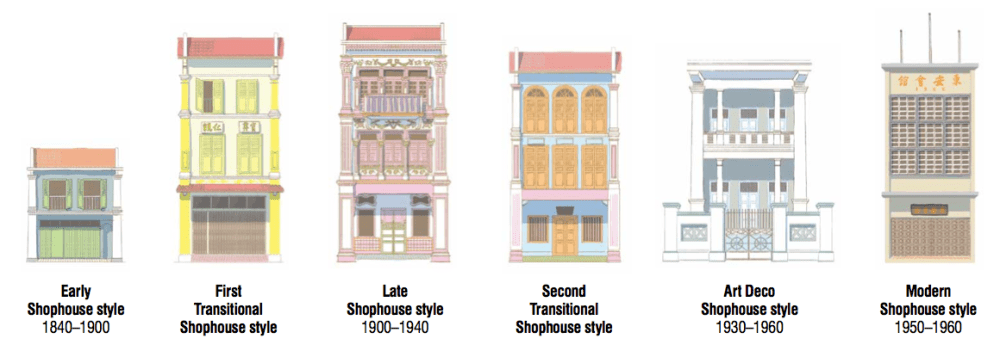
*Photo from URA Singapore.

Early Shophouse (1840 – 1900)
When Singapore’s trade started booming, the founder of Singapore, Sir Stamford Raffles, issued for a set of ordinances in 1822 for two-storey buildings with a veranda to be built. The ground floor was to serve the business while the second floor was the proprietor’s residence. The veranda that measured as five-foot, was to provide shelter for the street vendors and pedestrians from the weather and traffic.
Erskine Road
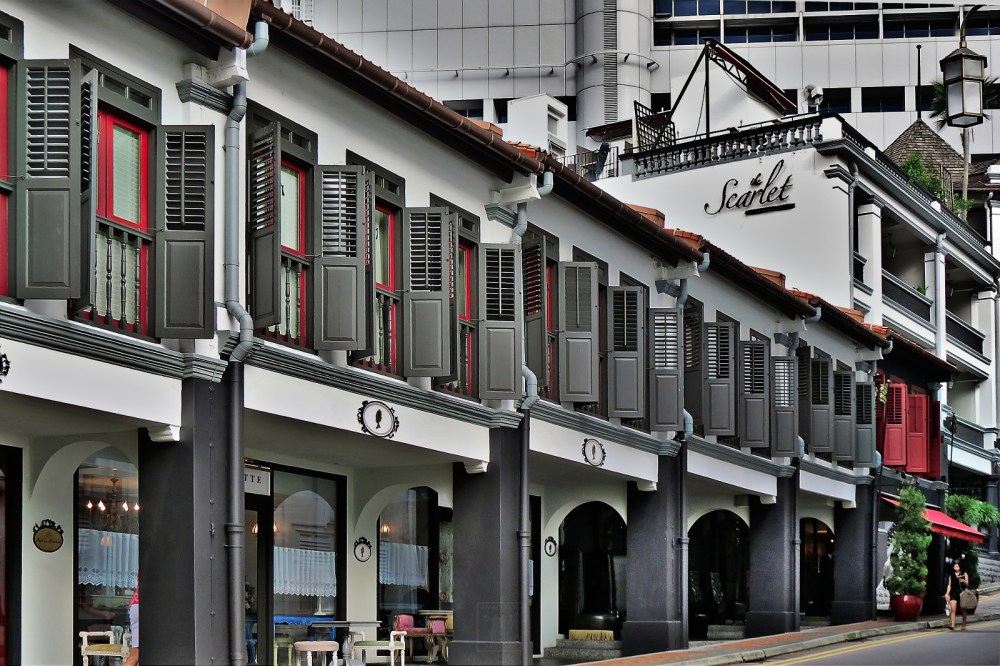
*Photo from Google Images.
Erskine Road, located in the Chinatown, has some of Singapore’s early shophouses built in a variety of architectural styles, including Chinese, Malay, and European influences.
First Transitional Shophouse (1900 – 1910)
With increase wealth and influx of skilled labour, shophouses became coloured and decorated with plaster and tile made by skilled craftsmen to show their status. Small panels of glass were added into the timber windows and shophouses became taller.
Neil Road Baba House
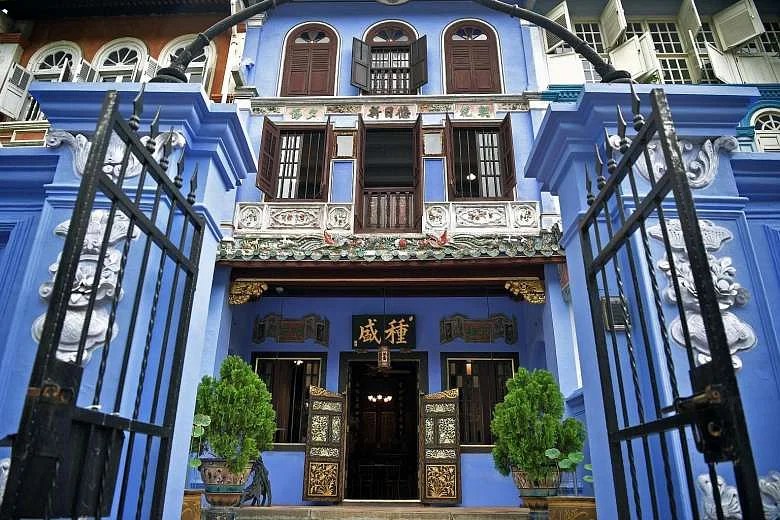
*Photo from Google Images.
The Baba House is a heritage townhouse that was once the ancestral home of a Peranakan Chinese family. It was acquired by the National University of Singapore (NUS) and meticulously restored to showcase the unique architectural and cultural aspects of a Peranakan home. Visitors to the Baba House can take guided tours to take a glimpse into the daily life, traditions, and customs of the Peranakan community and the unique architecture of the building.
Please note to make a booking prior to your visit.
Late Shophouse (1900 – 1940)
This is the most spectacular style particularly from the extensive use of plaster, tiles and cast iron ornamentation drawing inspiration from Europe mixed with Chinese motifs and funded by the rubber boom of the early 1900s. Each upper storey has three windows with minimal wall in between for maximum ventilation.
East Coast Road
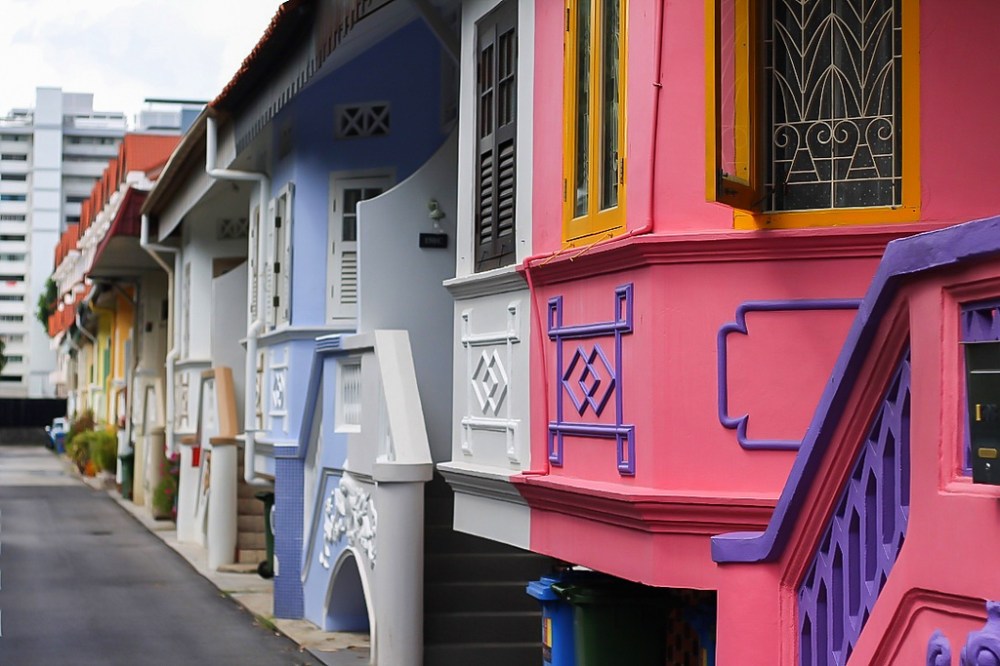
*Photo from Google Images.
These single-storey terrace houses stand beside a former sea wall near where the beach used to be. What makes these homes different from other shophouses is that the living area is built on raised ground to protect against the rising tides and floods then so that the residents can stay dry.
Petain Road

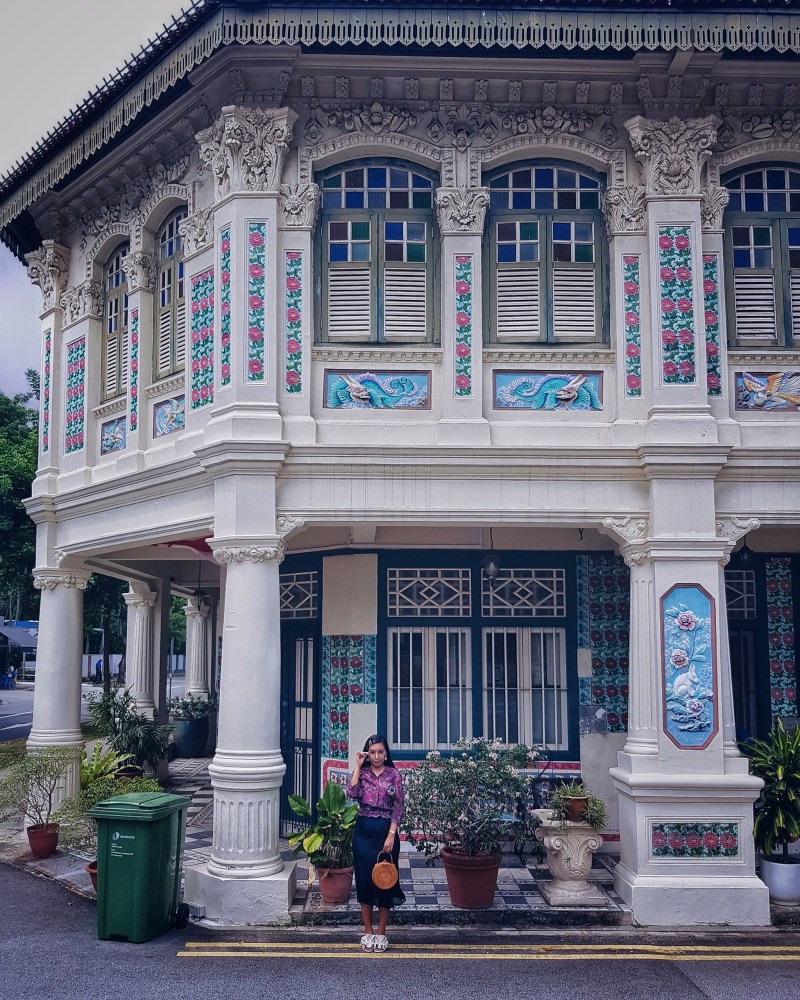
You are bound to spot shophouses as you walk along Jalan Besar but this one on 6 Petain Road is very popular for its beautiful Peranakan tiles plastered on the front.
Koon Seng Road
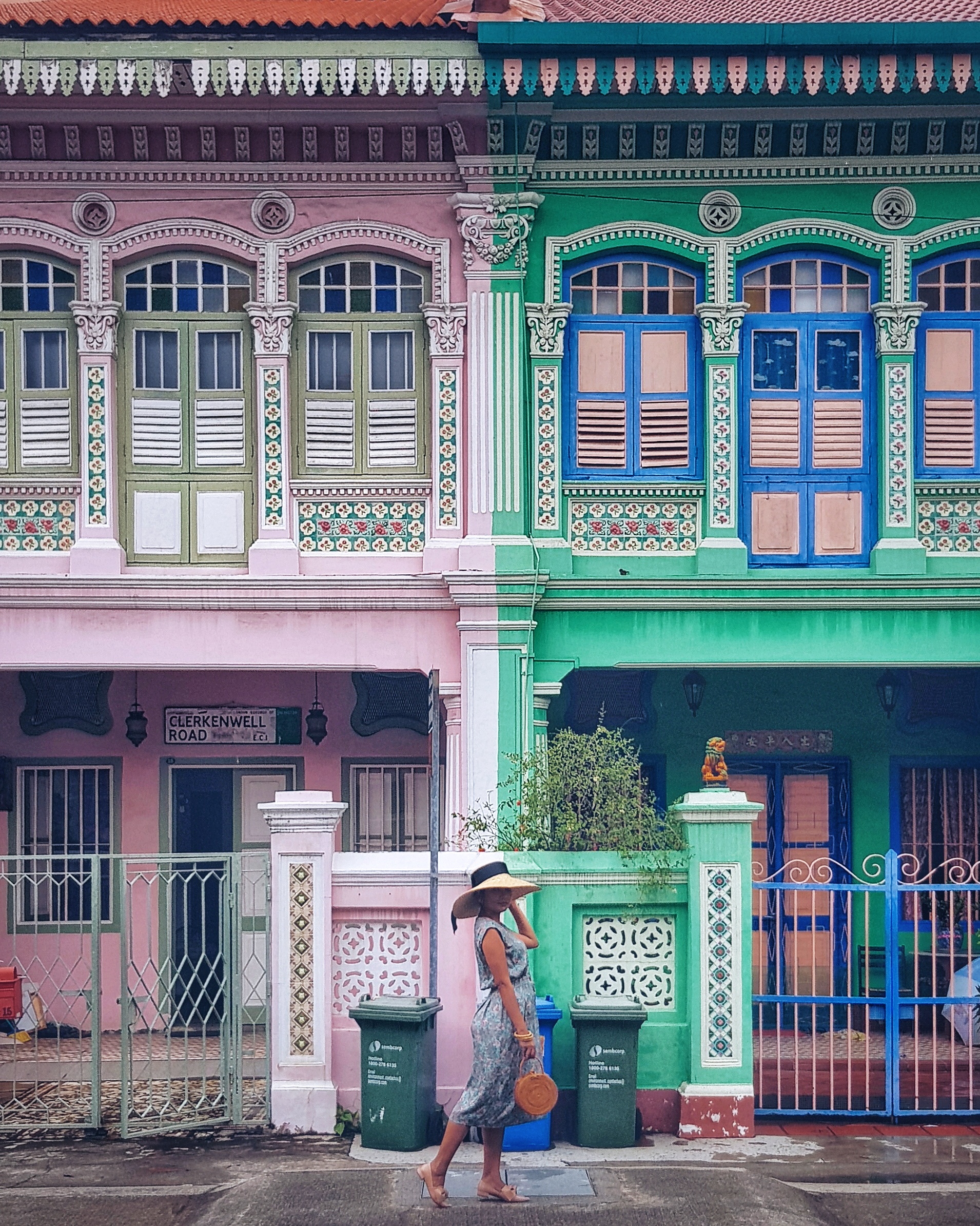
The most popular row of shophouses in Singapore goes to Koon Seng Road well-loved for its pastel colours. They didn’t always have these colours though. My maternal grandmother’s house was only a few streets down. We went to visit her regularly and we never noticed it as a tourist attraction or for being pastel. Can’t argue though, I love the colours now.
Lorong Bachok

This shophouse from 1929 that is located at the intersection of Lorong 19 Geylang and Lorong Bachok, tells a story with its architectural details.
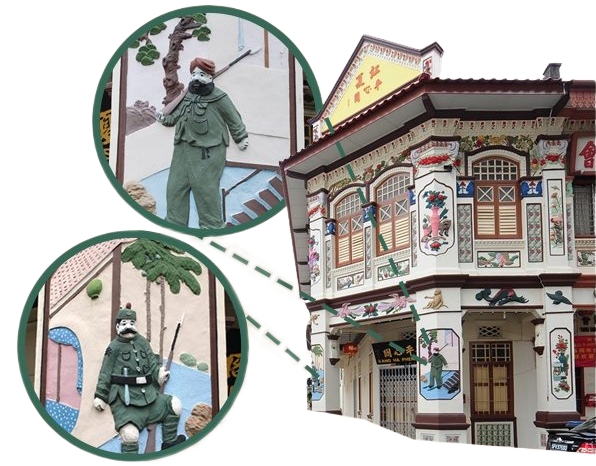

*Photos from SG101.
- Sikh Guards were moulded onto the column of the front entrance to “watch over” the building, replacing the traditional “door gods” of Chinese culture.
- Pillars also depicts Chinese tales such as Hou Yi, a mythical archer who shoots down nine of the ten suns, mythical animals and peonies.
- The variety of cultural influence can be found in the timber fretwork typically used in Malay houses, Peranakan wall tiles, French windows framed by Portuguese shutters, Anglo-American geometric floor tiles and Corinthian pillars.
Second Transitional Shophouse (1930 – 1940)
Shophouses of this style are simpler and more streamlined as builders began to cut down on the use of ornamentation due to the economic situation of that time during the Great Depression and the rising trend of the Art Deco Movement.
Cairnhill Road
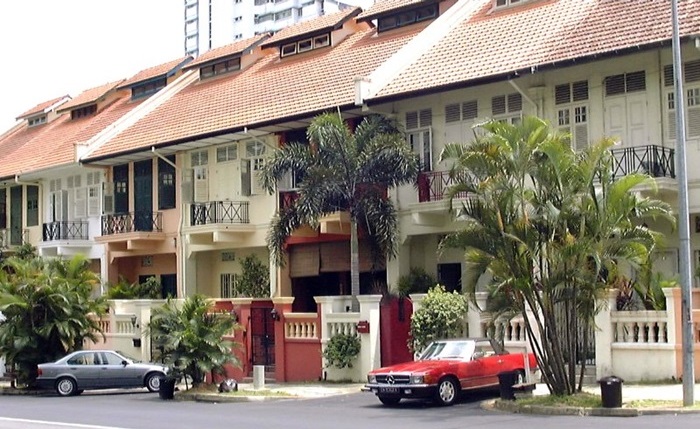
*Photo from Google Images.
Not a tourist spot as Cairnhill Road is primarily known for its residential properties, including condominiums and apartments. Located off Cairnhill Road is Cairnhill Conservation Area that consists of a cluster of shophouses that have been preserved and restored.
Art Deco Shophouse (1930 – 1960)
The Art Deco style is typified by classical motifs such as columns and arches. A common feature of this style is a plaque with the date of the buildings completion. Shanghai plaster was also a popular surface treatment.
Bukit Pasoh Dong Ya Building
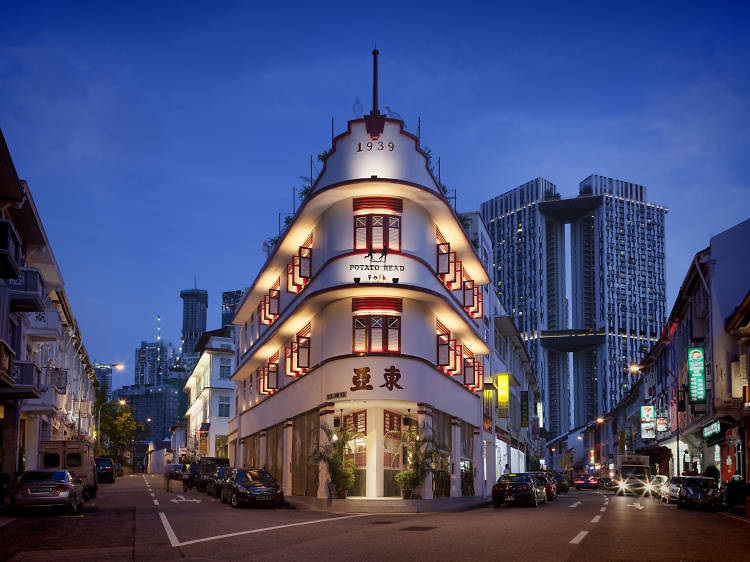
*Photo from Google Images.
The Dong Ya Building is a beautifully restored art-deco building that dates back to the 1939, proudly displayed at the top of the three-storey building. It use to house Tong Ah Eating House but has since been acquired by Potato Head Singapore, a restaurant, bar, and cultural space combined.
Modern Shophouse (1950 – 1960)
Common features of the Modern Shophouse style are its pragmatic design and utilitarian features. Air vents and thin concrete fins were added to improve ventilation , sticking closely to the disciplined geometric proportions of this style. Flat roofs became the norm and mild steel windows complemented the façade.
New Bridge Road

*Photo from Google Images.
Modern shophouses such the ones along New Bridge Road house businesses contribute to Singapore’s architectural charm.
Horne Road
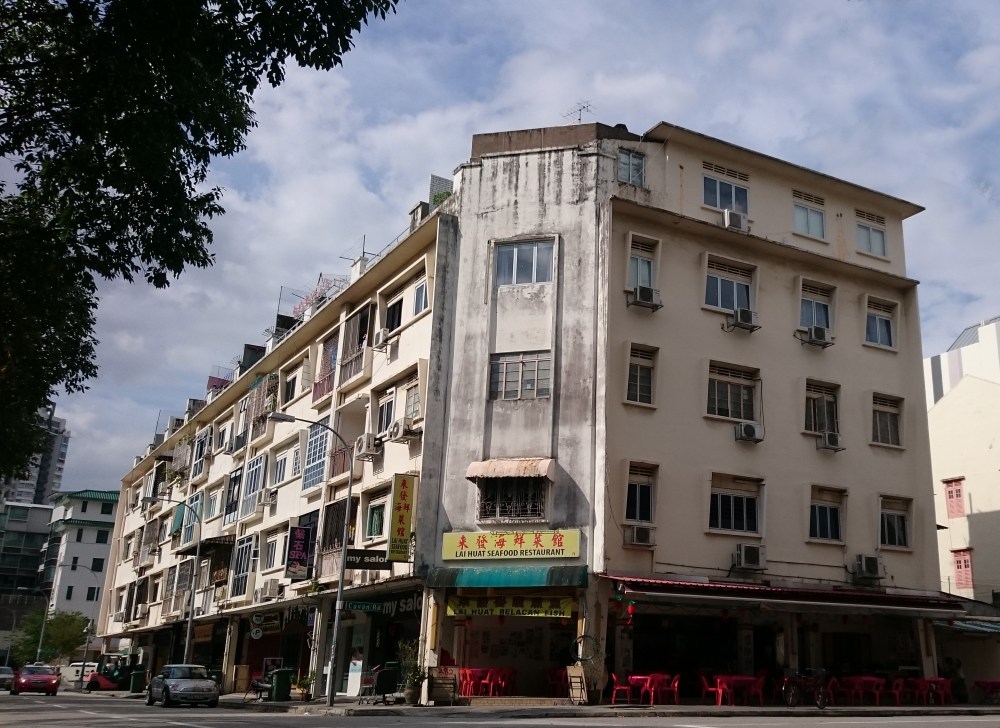
*Photo from SG Shophouse.
This building on 72 Horne Road is another example of a modern shophouse. This address is popular for Lai Huat Seafood Restaurant.

Join the list!
Subscribe for the latest exclusive updates delivered to your inbox.
Singapore Shophouse Tours
There are various Guided Tours in Singapore that you can take to learn more about the history of the districts and the shophouses of the area. Most are walking but if you’re feeling adventurous, there are Bike, Vespa and Food Tours too. If you’re looking for a private tour, contact the tours below for further inquires.

Related Post:

Coach Play Singapore Shophouse: The World’s First Coach Cafe and Largest Concept Boutique
Coach Play Singapore Shophouse is the largest Coach concept store in the world, spanning 3 stories at 4000 sq ft, where Singapore’s local charm meets Coach’s hometown, New York, in…

Peranakan Tiles in Singapore
I have a thing for tiles, really, I’m not just quoting the popular hashtag. I cannot get enough of it. I can spend hours scrolling through Pinterest looking through pictures…

A Guide to Thrift and Vintage Shopping in Singapore
There has been a keen interest in thrift shopping recently and I’ve been asked multiple times where I go to thrift shop here in Singapore. I guess you can say…
Pin This:
Reference:
SG101 Heritage Shophouses in Singapore
The SG Shophouse









 Love Bella Vida